
West Auckland communities hardest hit by recent flooding are coming together to build safer, stronger neighbourhoods, thanks to a locally supported community resilience programme. The Whau West Resilient Neighbourhoods Programme was established in 2025 by the Whau River Catchment Trust (WRCT) to help build more resilient neighbourhoods as a response to the Auckland floods of 2023.
With $20,000 in funding from the Your West Support Fund, the programme focuses on helping communities better prepare for future flooding and other natural hazard events through practical, neighbourhood-level action. WRCT’s Healthy Waters programme focuses on the Rewarewa sub-catchment, a flood-prone area within the wider Whau River catchment spanning New Lynn, Glen Eden, and Titirangi.
The area’s complex waterways, extensive piped streams, and dense urban development make it particularly vulnerable during heavy rainfall. Rather than relying on top-down solutions, WRCT works directly with residents to understand local risks and identify what support is needed closest to home. ‘The programme aims to strengthen social connections, build local leadership, and empower people to take ownership of their neighbourhoods and waterways,’ says Founding Trustee and General Manager, Gilbert Brakey.
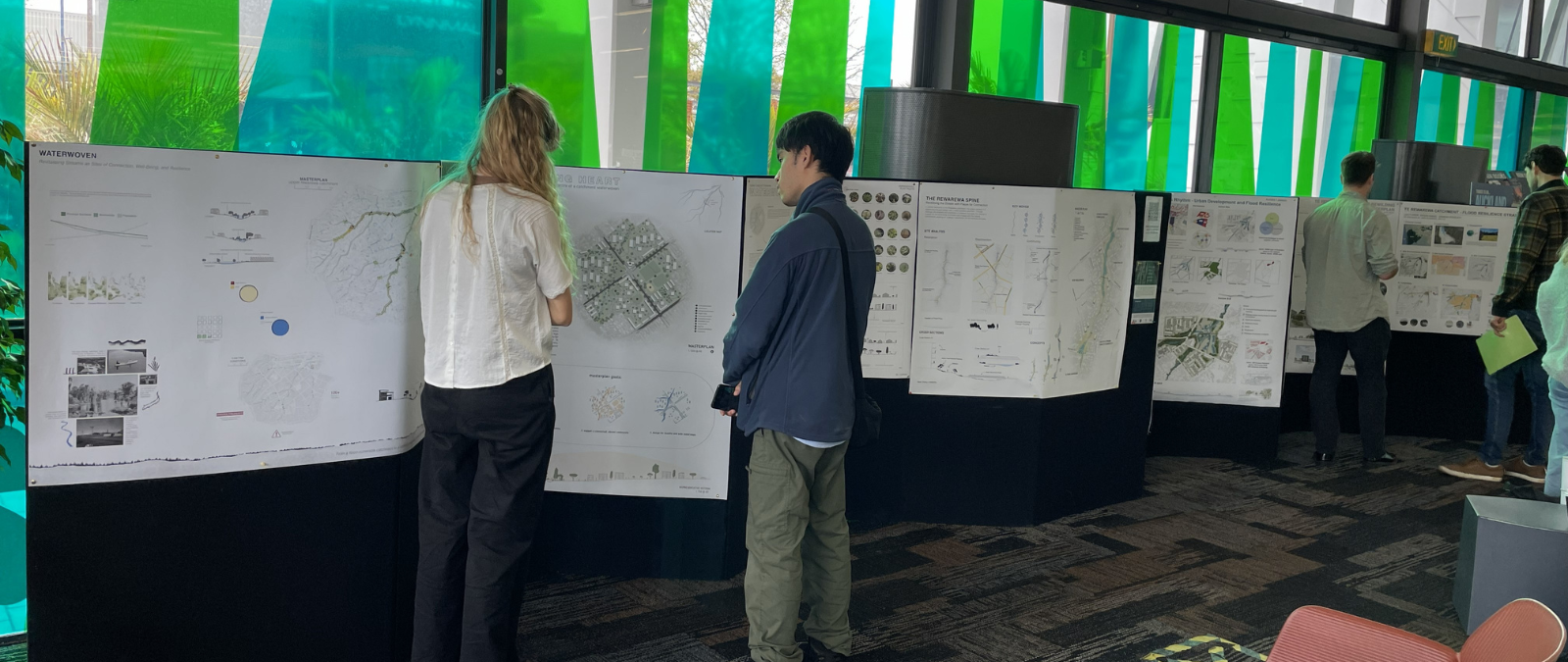
Community engagement is at the heart of this work. WRCT has carried out surveys, interviews, door-knocking, and site visits, alongside workshops and public events. A collaboration with Unitec’s School of Architecture saw landscape architecture students develop flood-resilient design concepts for the Rewarewa area. These ideas were later exhibited at New Lynn Library, giving residents the opportunity to explore flood-mitigation solutions at household, street, and catchment levels.
Hands-on activities proved especially powerful. Stream planting days attracted strong participation, helping restore waterways damaged in the 2023 storms while building a shared sense of purpose. In contrast, information-only workshops and surveys saw lower turnout, reinforcing the value of practical, resident-led action.
The programme highlighted the importance of trust, local knowledge, and working within neighbourhoods. ‘By connecting people with each other and their environment, the Whau West Resilient Neighbourhoods Programme is helping communities take meaningful steps to reduce future flood risks,’ says Gilbert.
This vital work will continue in 2026, with WRCT building on lessons learned and working alongside partners to support more resilient neighbourhoods across West Auckland.